
The boards came back
Rev A, the first circuit board I've ever designed and ordered, came back from the factory for my paper lanterns. Five came assembled, and all five are functional and flashed.
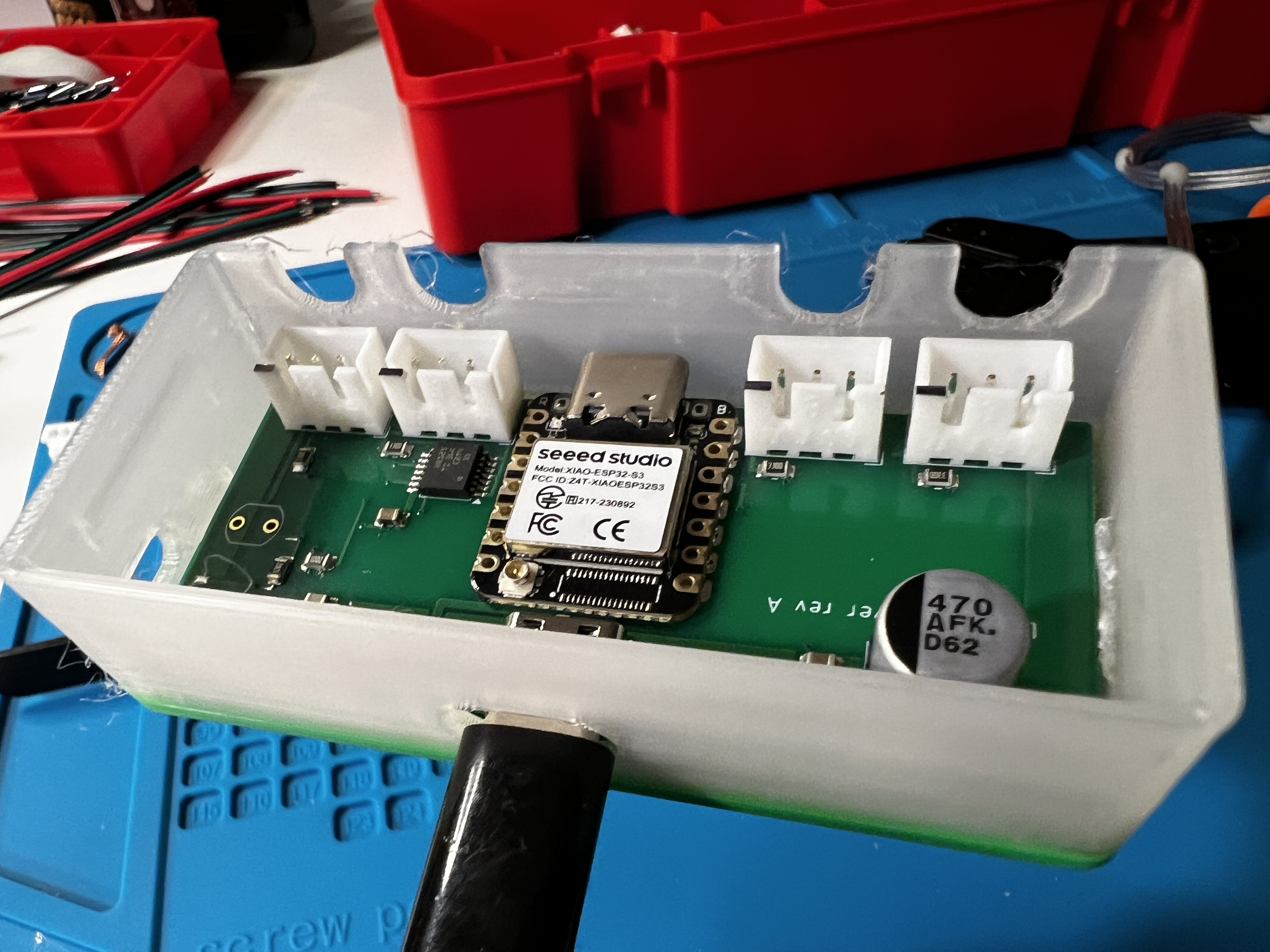
Rev A came back from the factory. It’s the first PCB I’ve ever designed and ordered, and I couldn’t have done it without my AI buddy.
Five of them arrived assembled, and all five are functional and flashed.
They replace a protoboard I wired by hand. That was my first project with soldered wires, and I had to go back and re-solder a few of the joints.
I haven’t hand-assembled a lantern with the new boards yet. These five came already built. But they’re what led me further down the rabbit hole of soldering SMD components and whatnot myself.
It runs its own wifi now
The lantern used to join my home wifi, so it had to stay in range of my network for me to change anything on it.
Now it runs its own wifi access point, and I connect to the lantern directly. It doesn’t matter where it’s placed. I can open Lantern Studio wherever it is and change it right there.
Next up: the mini
Rev A’s boards meant the next rev would be the mini, a single strand and battery powered.
all Lantern updates